I’ve put the UPS in a case. I was going to 3D print a case, but that’s a lot of plastic, so I just put it in a generic plastic container:
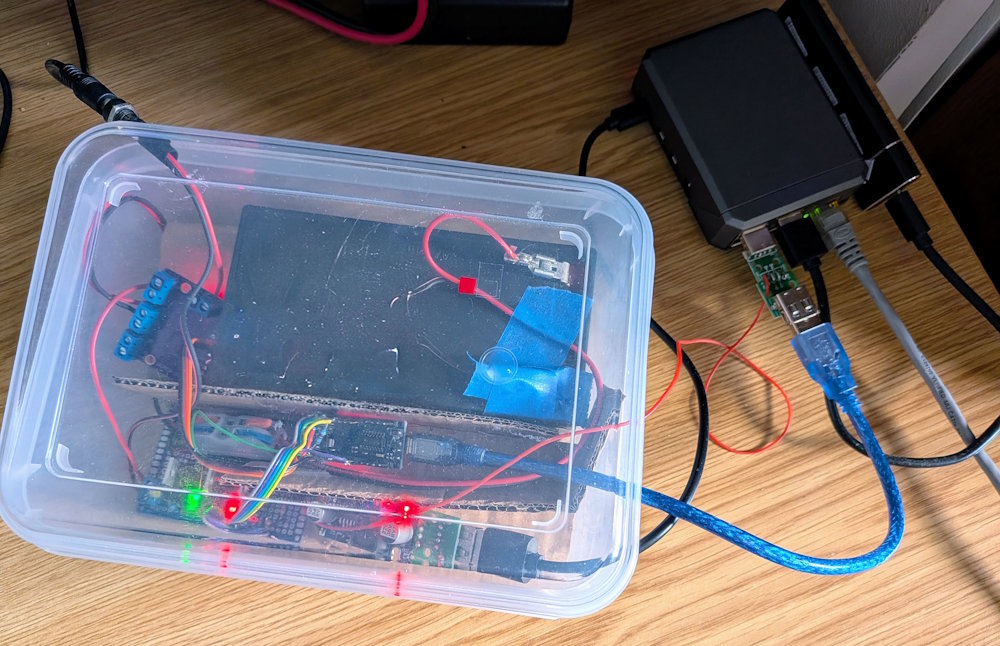
The lid keeps the dust out, inside I have put bits of cardboard in to keep things apart.
I’m not …
 November 21, 2026
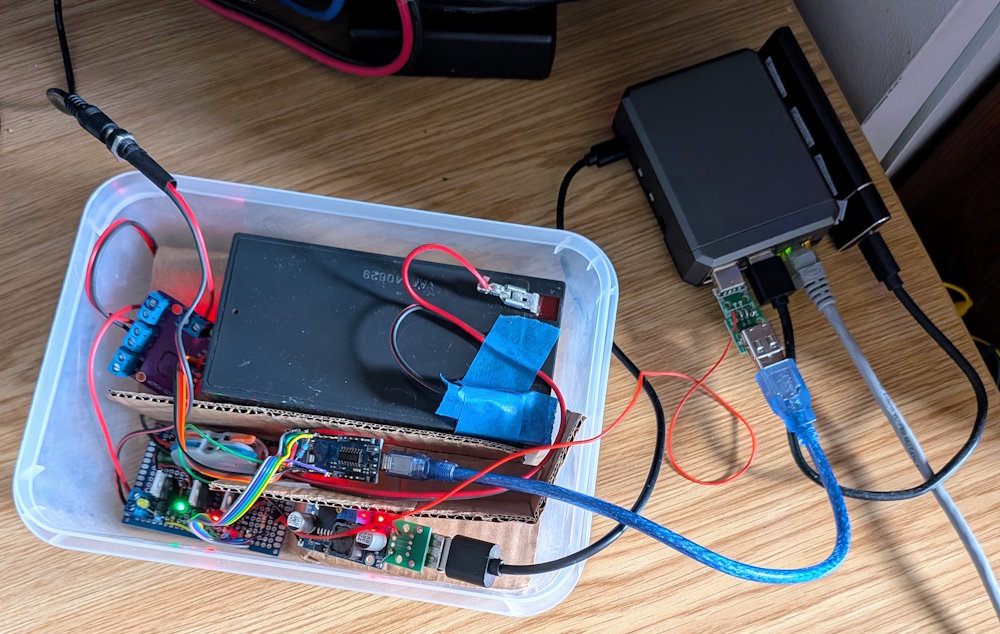
I’ve put the UPS in a case. I was going to 3D print a case, but that’s a lot of plastic, so I just put it in a generic plastic container:
The lid keeps the dust out, inside I have put bits of cardboard in to keep things apart.
I’m not …
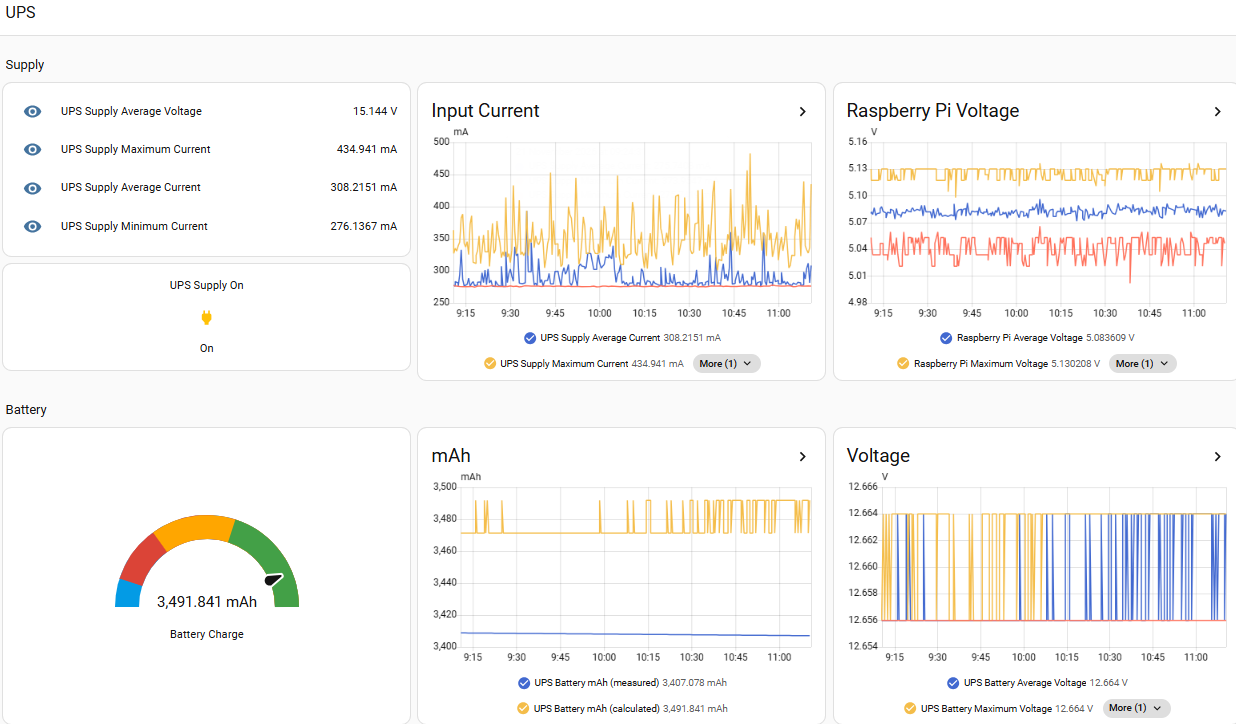
November 21, 2026The second part of the software is the Home Assistant side of things.
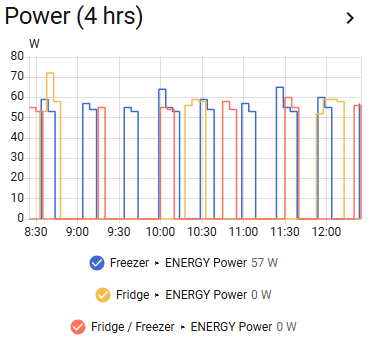
November 17, 2026In the house there is a fridge, freezer and fridge freezer with smart plugs that show how much power they are using. One of my dashboards shows the power used (among other things). They all switch on and off periodically as can be seen here:
It occurred …
November 11, 2026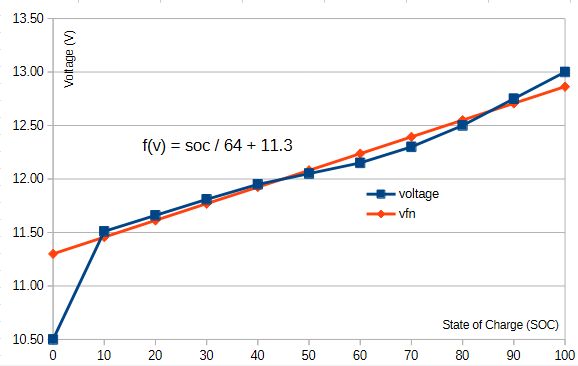
The voltage of a lead acid battery vs the SOC can be approximated to a straight line. This isn’t completely accurate especially at the extremes (0% and 100%) but it’s close enough. Especially …
November 7, 2026When testing the charge circuit, something didn’t seem quite right…
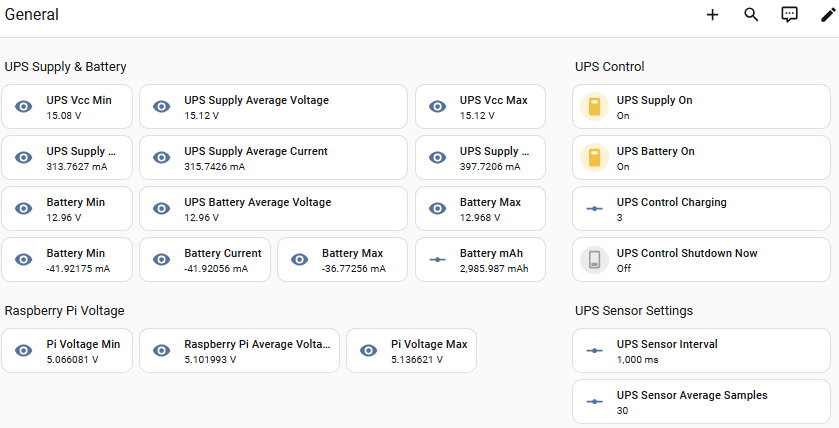
The battery current was about 40mA even though the charging duty cycle was set to 3 (with a maximum of 255). A duty cycle of 3 should mean that the battery is charging for …
November 6, 2026Something I noticed when I connected and disconnected the USB serial port on the Arduino Nano was that the Nano would reset. After a bit of googling it turned out that this was caused by DTR on the CH340 serial chip being connected to the RESET pin (via a …
October 23, 2026This was my test setup:
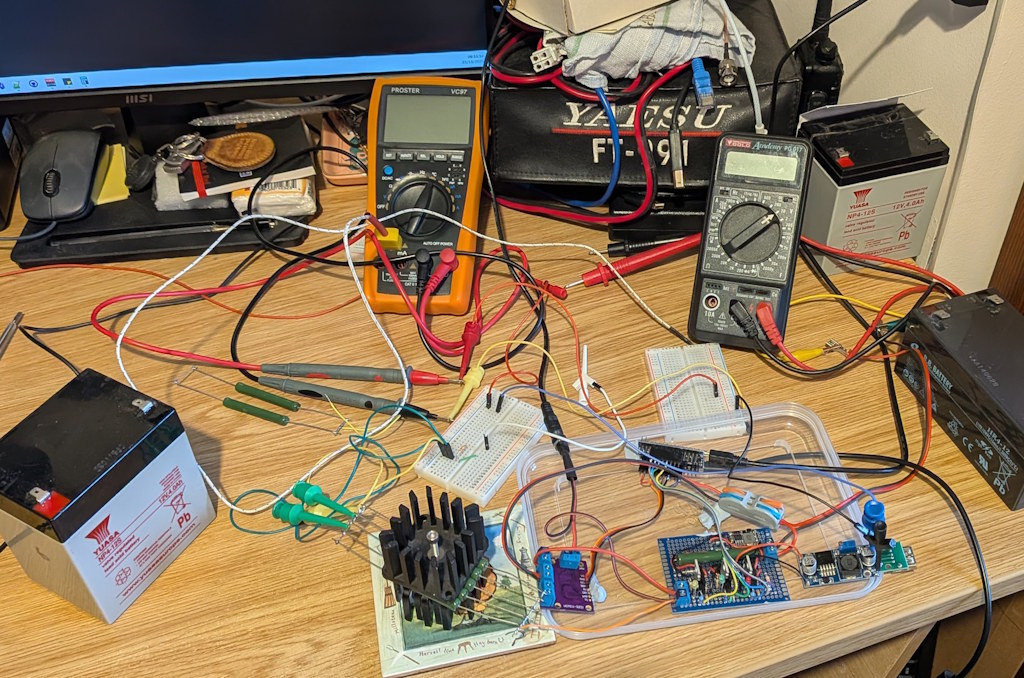
The only thing I wasn’t testing was the Raspberry Pi voltage. This left input voltage and current and battery voltage and current, from which I could work out things like efficiency and estimated run time.
I had 4 lead acid …
September 27, 2026I decided to have an uninterruptible power supply (UPS) for my Home Assistant (running on a Raspberry Pi). The design I came up with is shown below:
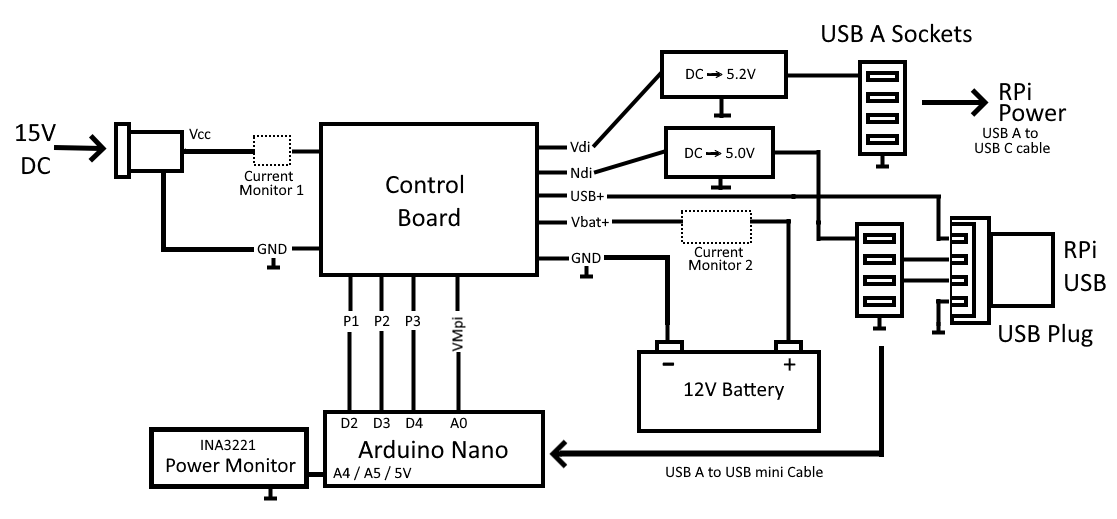
The input from the mains is supplied by a 15V AC to DC adapter (wall wart). This is shown as Vcc/Vss on …
September 19, 2026Debugging is much better than littering your code with print statements for lots of reasons - which I’m not going to go into here. But setting debugging up is not always straightforward.
To make things easier, I use an esp32 s3 board that had JTAG …
March 24, 2026It turned out that the original mouse trap wasn’t sensitive enough. Very small mice just didn’t trigger it. So I decided to improve the design.
The case of the trap is clear, so I thought I could have a beam of light going from one side to the …